Beijing tightens grip on auto industry after production speed begins to sacrifice quality
As Chinese automakers attempt to rewrite the rules of the global industry with an unprecedented pace of launches, authorities in Beijing are stepping in to temper the momentum of local companies. A vast nationwide campaign of unannounced inspections launched by four key ministries reveals that the rush to shorten development cycles has begun to leave visible traces in the quality and compliance of vehicles rolling off the assembly lines.
Deviations at the top: BYD and Geely, caught with irregularities in documentation
The fast pace of Chinese factories has shown its first limits even at the top of the industry. During recent inspections, government inspectors identified that certain models produced by giants BYD and Geely did not comply with the technical specifications declared in official homologation documents.
Among the irregularities found are:
- Non-compliant dimensions: Vehicle wheelbases that exceeded the maximum tolerances allowed by law.
- Underestimated consumption: Real fuel consumption values significantly higher than those displayed in the homologation sheets.
- Incomplete deliveries: Automobiles delivered to customers or dealerships without the required user manuals.
The revelations came shortly after the Ministry of Industry and Information Technology (MIIT), along with three other Chinese ministries, launched a year-long national inspection campaign, directly targeting production quality and road safety.
The Mirage of the Car Designed in 18 Months: Artificial Intelligence Versus Road Safety
The stakes of these inspections lie in the astonishing speed with which Chinese manufacturers bring new models to market. Currently, a vehicle developed in China takes, on average, just 2 years to get from concept to showrooms. By comparison, large traditional manufacturers in Europe, Japan or the US use conventional test and validation cycles of 3 to 5 years.
However, for China's ambitious auto industry, two years has already become too long. A consortium formed by IAT Automobile Technology and the China Association of Automobile Manufacturers (CAAM) recently proposed massive integration of artificial intelligence to cut development time to just 18 months.
Chinese regulators, however, are viewing this wave of enthusiasm with extreme skepticism. Authorities have launched parallel investigations to determine whether the excessive compression of design stages still allows for rigorous strength and safety testing.
Factory Commando: Unexpected Tests and Doubled Mileage
The enforcement measures introduced through the August 27 campaign impose strict rules on approximately 100 domestic automakers. The companies have until the end of 2026 to submit comprehensive reports on the quality, reliability and durability of each model in their portfolio. In addition, manufacturers are required by law to immediately initiate voluntary service recall procedures when they detect manufacturing defects.
The control methodology has been radically modified:
- Direct pickup: Inspectors pick up vehicles and components directly from factories or the distribution network, without prior notice.
- Hardware and software sealing: The technical configurations and source code of the sampled vehicles are sealed in place to prevent further modifications.
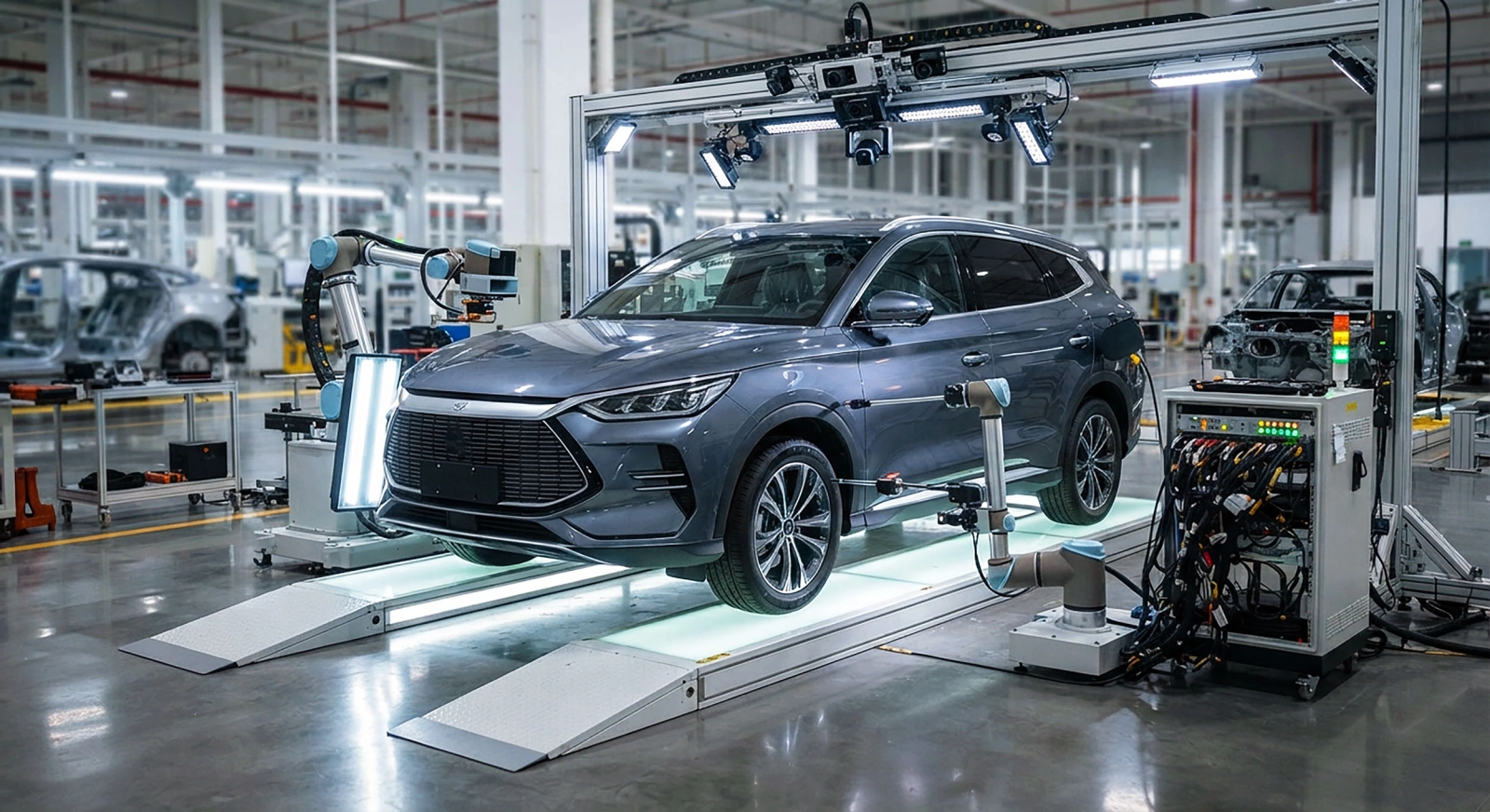
- Laboratory tests: Vehicles are subjected to extreme crash tests, structural inspections, and battery pack strength tests.
- Digital Security: Rigorous audits are conducted on cybersecurity and the protection of data collected by on-board computers.
Moreover, the authorities are preparing a legislative change with a direct impact on the launch schedule: doubling the minimum mandatory testing distance on public roads for new electric vehicles, from the current level to 30,000 kilometers. Such a requirement will add weeks or even months to the validation process, blocking attempts to launch cars in just 18 months.
The Global Stake: Protecting the "Made in China" Brand in Export Markets
This regulatory crackdown is not just a measure to protect domestic consumers, but a strategic move to protect China's international expansion. Chinese manufacturers are investing heavily to conquer markets in Europe, Latin America and Southeast Asia.
In this context, a wave of massive service recalls or safety scandals in foreign markets could permanently compromise the reputation of Chinese cars abroad. By imposing strict standards at home, Beijing is trying to ensure that only technically mature models make it to export, guaranteeing that the speed of expansion will not be overshadowed by major quality problems.
Impact in Romania: What the Beijing shock wave means for the domestic car buyer
The Romanian car market is experiencing the expansion of Chinese brands, which have gone from exotic presences to major players in the last two years. Behind this growth lies precisely the ability of Asian manufacturers to offer cars with modern features at considerably lower prices than their European or Japanese competitors.
The explosion of Chinese brands on the roads of Romania. Several Asian brands have already managed to build a solid commercial presence and distribution networks at a national level:
- MG (SAIC Motor): Records consistent sales, exceeding the threshold of 1,700 vehicles delivered in the first half of 2026 and relying on a network of over 30 dealers with integrated service. The compact MG4 Electric model won the title of Car of the Year 2024 in Romania, and the SUVs in the ZS and HS range are gaining significant ground in the hybrid segment.
- BYD (Build Your Dreams): After its official launch in the local market in 2025, the Chinese giant has recorded surprising sales volumes. The Seal U DM-i hybrid SUV model quickly became a top choice in the PHEV segment, while the Dolphin Surf compact model became one of the most affordable electric cars in dealerships. In certain months of 2026, BYD surpassed Tesla in the national rankings of new electric vehicle registrations to buyers.
- Geely: It entered the market strongly with a range of SUVs (Coolray, Cityray, Starray) and the EX5 electric model, relying on advanced modular architectures and extended warranties.
- Other expanding players: Brands such as Chery (with the Omoda and Jaecoo series), Lynk & Co, Voyah or Hongqi are making their presence felt, addressing both the volume segments and the premium market or commercial vehicles.
How China's tightening regulations influence Romanian customers
For the Romanian buyer, the decision of the Beijing authorities to put a brake on the reckless pace of development is excellent news, reducing the risks associated with the acquisition of new technologies.
- More technologically mature and safer cars: Mandatory road tests of at least 30,000 kilometers and unannounced factory inspections mean that cars exported to Romania will be better checked. Youthful software problems or small assembly defects – often found in models launched quickly – have a much smaller chance of reaching showrooms in the country.
- Better cybersecurity standards: Rigorous auditing of digital components and data protection by Chinese inspectors helps manufacturers more easily align with strict European directives (such as UN R155/156 regulations on cybersecurity and GDPR).
- Avoiding bottlenecks in Romanian service networks: After-sales networks and spare parts stocks for Chinese brands in Romania are still in the process of being consolidated. A massive service recall caused by a design error would have created congestion in service centers and long waiting times for customers. Preventing defects directly at the source protects the local distribution network.
- More predictable launch cycles: Although Romanian buyers will no longer see a new generation or facelift every 18 months, the slightly slower pace will bring stability and protect the resale value of used cars – an extremely important aspect in the domestic auto market.
In conclusion, the increased rigor of controls in China transforms Chinese cars sold in Romania from purely budget options into solid alternatives, technically validated and capable of competing directly with traditional European brands.