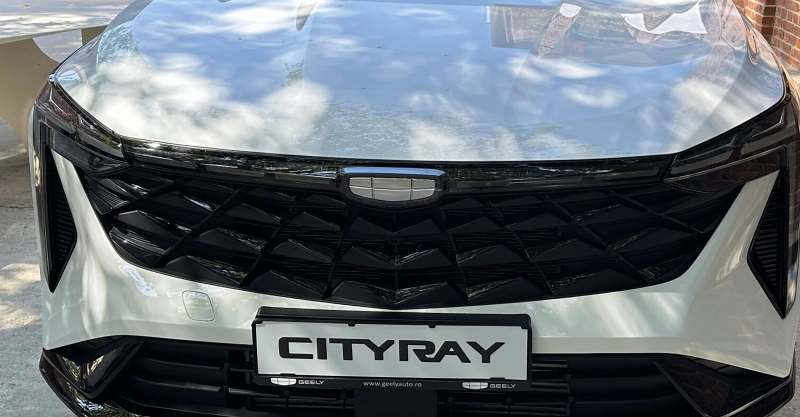
Revolution Under the Hood: Geely Breaks Records with New i-HEV System
While much of the auto industry has shifted its gaze obsessively towards total electrification, Chinese giant Geely has just issued a clarion call: the internal combustion engine is not only surviving, but is undergoing an unprecedented technological renaissance.
With the new i-HEV hybrid system, Geely managed to achieve a thermal efficiency of 48.4%, a figure that, until recently, seemed reserved only for theoretical laboratory calculations.
Thermal Efficiency: The Holy Grail of Engineering
For those unfamiliar with the term, thermal efficiency is the ability of an engine to convert chemical energy from fuel into mechanical energy (motion) instead of losing it as heat. Most modern gasoline engines struggle to break the 40% mark.
By achieving a 48.4% share, Geely drastically reduces energy losses. The result? More power with less "effort" from the engine.
The secret behind the numbers: Artificial Intelligence
The performance was not achieved solely through metallurgy and mechanical design, but through software. The i-HEV system uses advanced Artificial Intelligence algorithms that optimize each process in real time:
- Micro-second fuel injection.
- Managing the energy flow between the thermal and electric engines.
- Constantly adapting to road conditions to keep the engine in the "ideal zone" of operation.
2.2 Liters per 100 km: Goodbye, Frequently Visited Gas Stations?
The most shocking figure for the average consumer, however, is not the efficiency percentage, but the fuel consumption. Independent tests, validated by Guinness World Records, indicate an average consumption of only 2.2 liters/100 km.
This value makes family cars more economical than many scooters or small motorcycles.
A crucial aspect mentioned by Geely representatives is the versatility of the system. The i-HEV technology is not limited to a specific displacement; it can be successfully implemented on both 1.5-liter and 2.0-liter engines, offering the same record efficiency regardless of the vehicle size.
What Does This Mean for the Auto Market?
The new system is set to debut on production models this year, putting immense pressure on global competitors (such as Toyota and BYD) who are in a tight race for hybrid supremacy.
Immediate impact:
| Feature | Industry Standard | Geely i-HEV |
| Thermal Efficiency | ~40-41% | 48.4% |
| Average Fuel Consumption | 4-5 L/100 km | 2.2 L/100 km |
| Control Technology | Standard ECU | AI-Driven Optimization |
Conclusion
Geely is demonstrating that hybridization is not just a transitional stage full of compromises, but a mature technological solution that can offer record-breaking ranges without the “charging anxiety” of full-electric cars. If these figures translate into reliable performance in everyday use, we could witness the biggest paradigm shift in the last decade.
It's clear: the future is not only electric, but, above all, smart.
How do you think European manufacturers will react to this performance coming from China, given the increasingly strict emissions regulations?