Ford rehires 350 veteran engineers after AI fails quality control
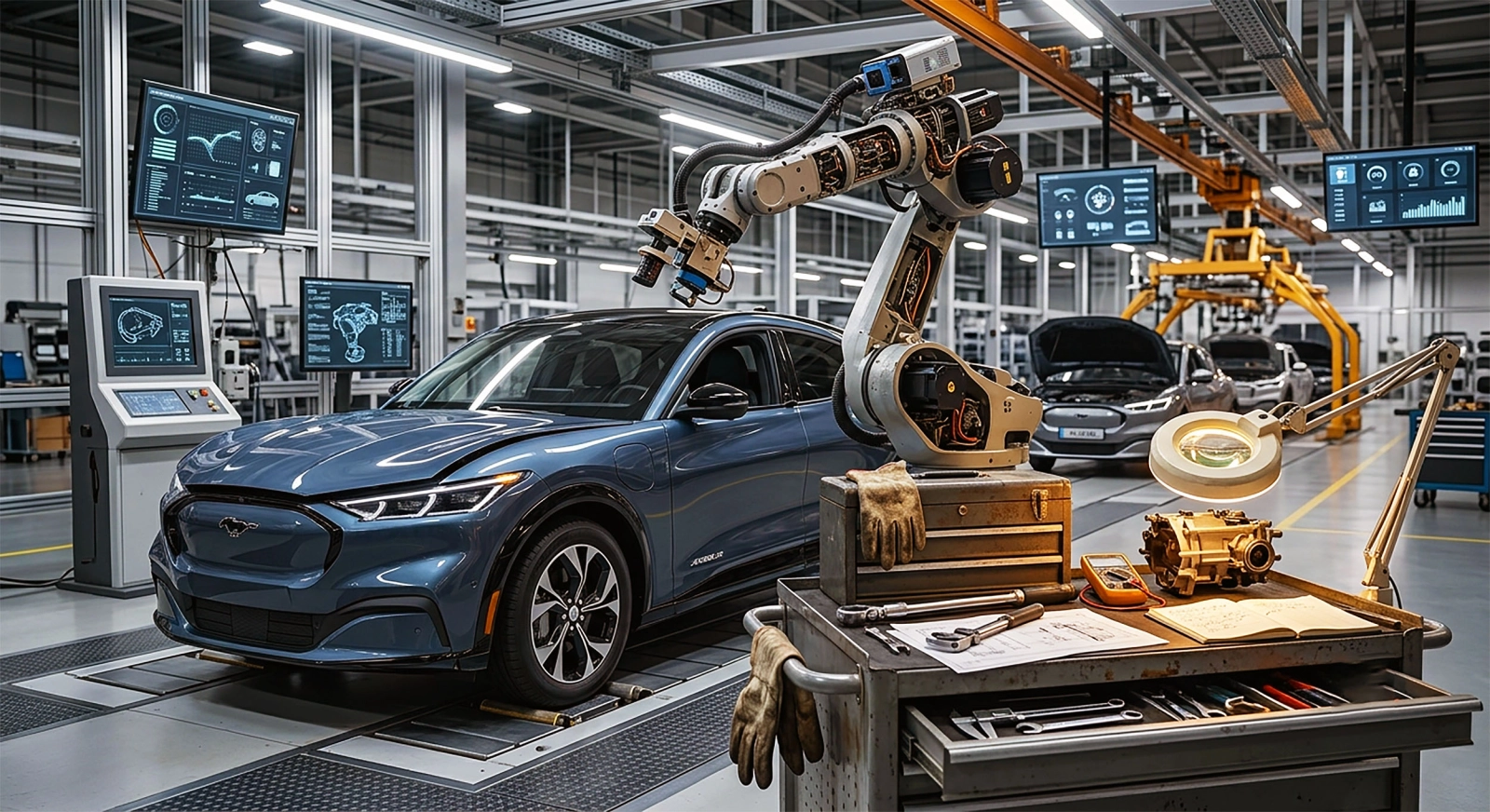
In an era where big corporations are blindly pursuing digitization and automation, auto giant Ford has just given the entire industry a brutal lesson in realism: artificial intelligence cannot (yet) replace human intuition and experience. After a failed technological experiment that cost the company millions of dollars and a massive blow to its image, the American automaker was forced to take a step back and rehire 350 veteran engineers, many of whom were the very people previously laid off to make way for algorithms.
The automation trap and the black record of 2025
The coexistence of artificial intelligence with factory workers and showroom customers is already a reality in the automotive industry. However, in a desire to maximize efficiency and guarantee superior quality, Ford has gone a step further, replacing the human factor in the quality control department with a complex AI-based system. This decision has led to the dismissal of more than 300 experienced engineers in recent years.
The result? A logistical and reliability disaster. Instead of reducing defects, the new AI-based system proved ineffective in the face of real-world complexity. 2025 was a record-breaking year for Ford:
- 153 service recall campaigns.
- Approximately 13 million vehicles affected, becoming the brand with the most quality problems on the market that year.
High-level Mea Culpa: "We mistakenly believed that simply introducing AI was enough"
Realizing that software couldn't replace decades of hands-on experience, Ford management decided to fix the mistake. The company brought 350 veteran engineers back to the factories.
Charles Poon, Ford vice president of Vehicle Hardware Engineering, openly explained this strategic repositioning:
"We mistakenly believed that simply by introducing artificial intelligence and assimilating the design requirements we had, we would produce a high-quality product. Over the past years, we have not paid as much attention to the experience of the most competent engineers on the teams, who have been with us throughout multiple production cycles."
The mission of the 350 rehired veterans goes beyond simply returning to the control posts from which they were removed. They have been given a triple role in Ford plants:
- Guaranteeing quality directly on production lines.
- Mentoring new generations of newly hired young engineers.
- Reprogramming and calibrating the AI system, teaching the algorithms how to recognize errors they initially ignored.
People's Revenge: Ford Returns to the Top of Quality in 2026
The effects of the return of the "old guard" were not long in coming. The change in strategy radically transformed the brand's performance in record time.
If 2025 was a nightmare, the first half of 2026 shows a completely different reality: the number of service recall campaigns has dropped dramatically to less than 50.
Moreover, the success of this move has also been certified by independent analysts. The latest quality study conducted by the prestigious American company JD Power now places Ford in a position that was unexpected just a year ago:
- 1st place in the quality ranking among mass-market brands.
- Second place overall in the entire automotive industry, surpassed only by the sports car manufacturer Porsche.
The Ford case will likely remain a case study in management textbooks. It demonstrates that while artificial intelligence is a formidable optimization tool, it only reaches its full potential when guided by the expertise, flair, and experience accumulated over decades of human engineering.