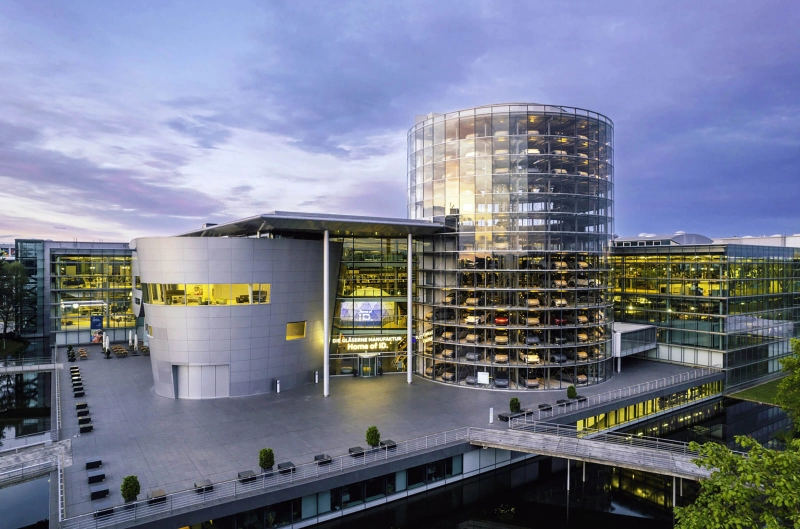
End of an Era: Volkswagen Closes Dresden “Transparent Factory” – A Difficult First in Germany
For the first time in its 88-year history, German car giant Volkswagen is having to permanently close a production plant in its home territory. The facility in question is the famous "Transparent Factory" (Gläserne Manufaktur) in Dresden, an architectural gem that opened in 2002.
Production activity in Dresden, where the compact electric ID.3 model was currently assembled, will cease permanently this week, marking a symbolic moment of the enormous pressures facing Europe's largest automaker.
The Context of the Closure: Financial Pressures and the Declining Electricity Market
The decision to close the Transparent Factory is not an isolated one, but is part of a much broader context of economic and strategic difficulties affecting the entire Volkswagen Group. The closure represents a concrete step in the company's plans to reduce costs and increase its operational profitability, amid an increasingly hostile market environment.
1. Cooling of the Electric Vehicle (EV) Market
The main reason for the factory closure is the lower-than-expected demand for electric vehicles in Europe, including the ID.3 model produced in Dresden.
- Production Adjustment: In recent months, Volkswagen has had to temporarily suspend production at several EV-focused plants (including Dresden and Zwickau) to adjust inventories to current market demand.
- Slow Transition: The transition to electric mobility is proving to be slower and more complex than initial estimates, forcing manufacturers, including VW, to reevaluate and further reinvest in internal combustion engine technologies.
2. Pressures on Cash Flow
The Volkswagen Group is facing considerable financial pressures that require drastic spending cuts.
- Weak Sales in Key Markets: Falling demand in Europe and, in particular, weak sales in China (VW's largest market) are putting enormous pressure on revenues.
- Reduced Investment Budget: The company is struggling to efficiently allocate an investment budget of approximately 160 billion euros for the next five years (a reduced amount compared to the previous plan of 180 billion euros), being forced to eliminate projects and reduce underperforming capacity.
- Long-Term Challenges: Analysts warn of continued cash flow pressures in the coming years, forcing management to look for aggressive ways to grow profits.
3. Low Production and High Costs
The Dresden factory, although iconic, has always been a relatively low-volume production facility, being more of a showroom and delivery center.
- Small Volume: Since its opening in 2002, the factory has produced less than 200,000 cars (Phaeton, Bentley Continental Flying Spur, e-Golf and ID.3), an insignificant volume compared to the annual production of the main plant in Wolfsburg.
- High Operating Costs: Its unique design, based on glass and transparency, although spectacular, entailed high operational and maintenance costs.
A "Second Life" for the Glass Factory
Although vehicle production is ending, the building itself will not be abandoned. The Dresden Transparent Factory, renowned for its unique architecture and publicly accessible assembly process, will be leased to the Technical University of Dresden and will serve as a development center for artificial intelligence (AI) projects and emerging technologies, while also retaining its role as a tourist attraction.
Conclusion
The closure of the Dresden Transparent Factory, a facility initially associated with luxury models and then with the electric vanguard, is a clear signal of the difficulties facing Volkswagen and the German auto industry in general. This unfortunate first in the company's nearly century-long history highlights the need for tough restructuring to cope with weak demand for EVs, a global economic slowdown and competitive pressure, especially from Asia.