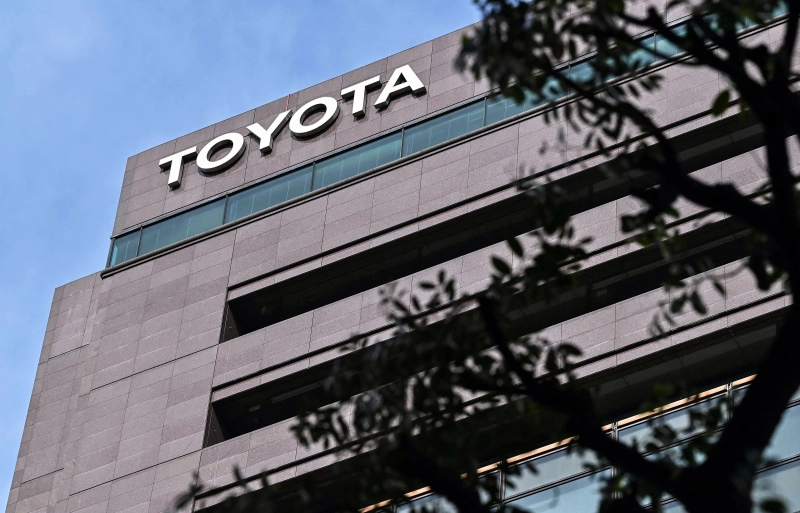
Toyota's paradox: Global sales decline due to Middle East conflicts, but increase in Romania
Toyota Motor Corp. reported its third consecutive month of global sales decline in April compared to the same period last year, as the Middle East conflict has severely affected the company's logistics and business, with exports to the region plummeting by more than 90%.
Global indicators in numbers
- Global sales: They decreased by 3.7% compared to the previous year, reaching a volume of 902,015 units (figure including subsidiary Daihatsu Motor).
- Global production: Despite logistical issues, production increased by 3.4%, reaching 933,685 vehicles.
- China market: The Japanese manufacturer continues to face major difficulties in the face of local competition, recording a massive 25% drop in sales.
- Middle East Crash: Exports plummeted by 92%, with only 2,418 vehicles delivered amid geopolitical tensions.
Toyota has managed the impact of the conflict better than other manufacturers, keeping factories running despite disruptions in the Strait of Hormuz. Demand for the brand's models remains strong globally, with customers waiting months in some key markets. However, the current results also suffer from the high comparison base from the previous year, when sales were boosted by early purchases ahead of new tariffs and the launch of the new generation RAV4.
Financial estimates and warnings
Chief Accounting Officer Takanori Azuma pointed out that Toyota exports between 500,000 and 600,000 vehicles to the Middle East annually, estimating that nearly half of that volume will be directly affected. Due to increased logistics and raw material costs from the Iran war, Toyota is forecasting an unexpected drop in profit for the fiscal year ending March 2027.
The company is targeting an operating profit of 3 trillion yen (~$18.8 billion), below analysts' expectations and below the 3.8 trillion yen it achieved in the previous fiscal year. Suppliers have already warned of component shortages, with the automaker estimating the total financial impact at around 670 billion yen.
Toyota's performance on the Romanian market: A spectacular evolution
While the global geopolitical context creates turbulence in supply chains and Asian markets, Romania represents a true oasis of growth for Toyota. The Japanese manufacturer is taking full advantage of the accelerated transition of Romanian drivers to ecological and hybrid vehicles.
According to data published by the General Directorate of Driving Licenses and Registrations (DGPCI) and analyzed by the Association of Automobile Manufacturers and Importers (APIA), the new car market in Romania recorded an overall growth of 2.7% in April, reaching a total of 10,112 registered units.
In this landscape, Toyota shines, securing a solid position on the podium of national preferences.
Top 5 Car Brands in Romania (April)
| Rank | Brand | Units Registered |
| 1 | Dacia | 1,711 |
| 2 | Toyota | 1,062 |
| 3 | Volkswagen | 913 |
| 4 | Skoda | 775 |
| 5 | Mercedes-Benz | 445 |
Toyota models that dominate local rankings
The brand's success in Romania is driven by two extremely popular models, both powered by leading hybrid technology:
- Toyota Corolla: It was the second best-selling model in the entire country in April (459 units), surpassed only by the Dacia Duster and ranking first among all non-rechargeable hybrid cars.
- Toyota Yaris Cross: Confirms its status as a successful urban SUV, reaching the national top 10 with a volume of 246 new units registered.
Why is Toyota growing in Romania? The answer lies in the massive appetite for environmentally friendly cars. In April, “electrified” cars (hybrids and electric) recorded a 26.3% jump, reaching a historic market share of 68% of total registrations in Romania. This massive orientation of Romanian customers towards full hybrids directly benefits Toyota’s long-term strategy.