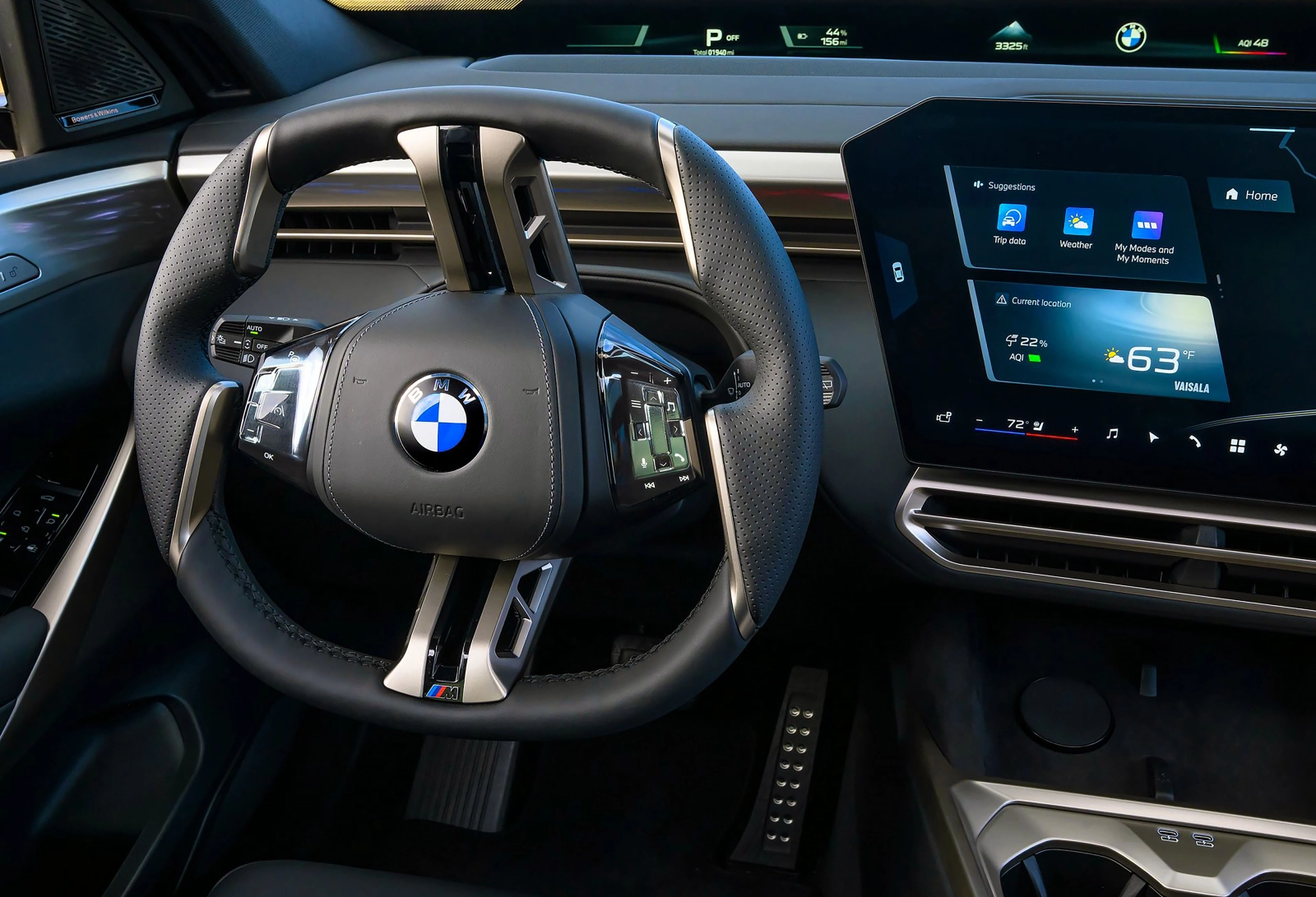
BMW urban semi-autonomous driving, launch in 2027, new functions and prospects for Romania
The technological revolution in the automotive industry is taking another major leap towards the mobility of the future. German car manufacturer BMW has announced a significant expansion of its assistance functions for semi-autonomous driving, taking the technology beyond national roads and motorways, directly into the complexity of urban agglomerations. Starting in 2027, the new stage of assistance systems will officially begin, with Germany being the first market where these capabilities will become fully functional in real traffic.
From the highway to the city: A natural evolution of BMW systems
Currently, the latest generation models in the Munich-based brand's portfolio – including the iX3, iX4, X5, 3 Series and 7 Series – already offer an advanced semi-autonomous driving experience on motorways and extra-urban roads, meeting the SAE Level 2 standard.
- The leap to cities: Until now, these systems were losing their effectiveness or had a strictly limited role at the entrance to densely populated areas or at complex intersections.
- Premiere in 2027: The plan announced by the manufacturer provides that, starting next year, these smart functions will be extended to urban areas, with Germany being the launch hub for a connected and continuous mobility network.
How the system works: Advanced assistance guided by BMW Maps
The new urban capabilities are designed to take a significant portion of the driver's effort in heavy traffic, working in close correlation with the car's navigation system.
- Assisted complex maneuvers: With route guidance activated directly in BMW Maps, the vehicle can assist the driver when making turns, dynamically changing lanes in the city, in delicate priority situations and smoothly navigating roundabouts.
- Intersection and traffic light management: In certain markets, the system already allows automated stopping and starting at red or green traffic lights, integrating the flow of urban traffic in an extremely smooth manner.
- Driver responsibility: As with highway scenarios, SAE Level 2 functions require the driver to remain constantly attentive to the road and ready to take control instantly, the system being purely assistance in nature and not fully autonomous driving.
Rigorous testing and independent validation
Implementing such a complex technology in the unpredictable environment of cities required an exhaustive testing and certification program.
- Validation in real traffic: Prototypes equipped with the new software packages have traveled thousands of kilometers in difficult urban scenarios, facing pedestrians, cyclists, roadworks and various road signs.
- Safety certification: All necessary testing procedures in real traffic conditions have been successfully completed and verified in advance by an independent technical service, guaranteeing compliance with the highest road safety standards before commercial launch.
The situation in Romania: Will the new urban functions work on local roads?
With the announcement of the launch in Germany in 2027, a natural question on the lips of the brand's enthusiasts and customers in our country is related to the availability of these functions in Romania.
Regional expansion strategy: The manufacturer has confirmed that after the German premiere, the city functions will be gradually expanded to other countries. This means that partially autonomous driving guided by navigation will gradually become available continuously – from leaving the motorway, crossing rural roads and into the heart of major European cities.
Conditions for the Romanian market. In order for these functions to become active on Romanian roads, several stages need to be completed:
- Digital map update: The system depends on the extremely high accuracy of the cartographic data provided by BMW Maps for the local urban infrastructure (road markings, traffic light positioning, geometry of intersections and roundabouts).
- Legislative framework and approval: The gradual expansion in Europe depends on the approvals of national and European regulatory authorities for advanced urban assistance systems.
The outlook for Romanian drivers: Owners of new-generation BMW models in Romania will most likely receive these functionalities via over-the-air (OTA) software updates or with the purchase of new vehicles, as the manufacturer's high-precision mapping data network is officially expanded to the Romanian market, following the European post-launch implementation calendar.