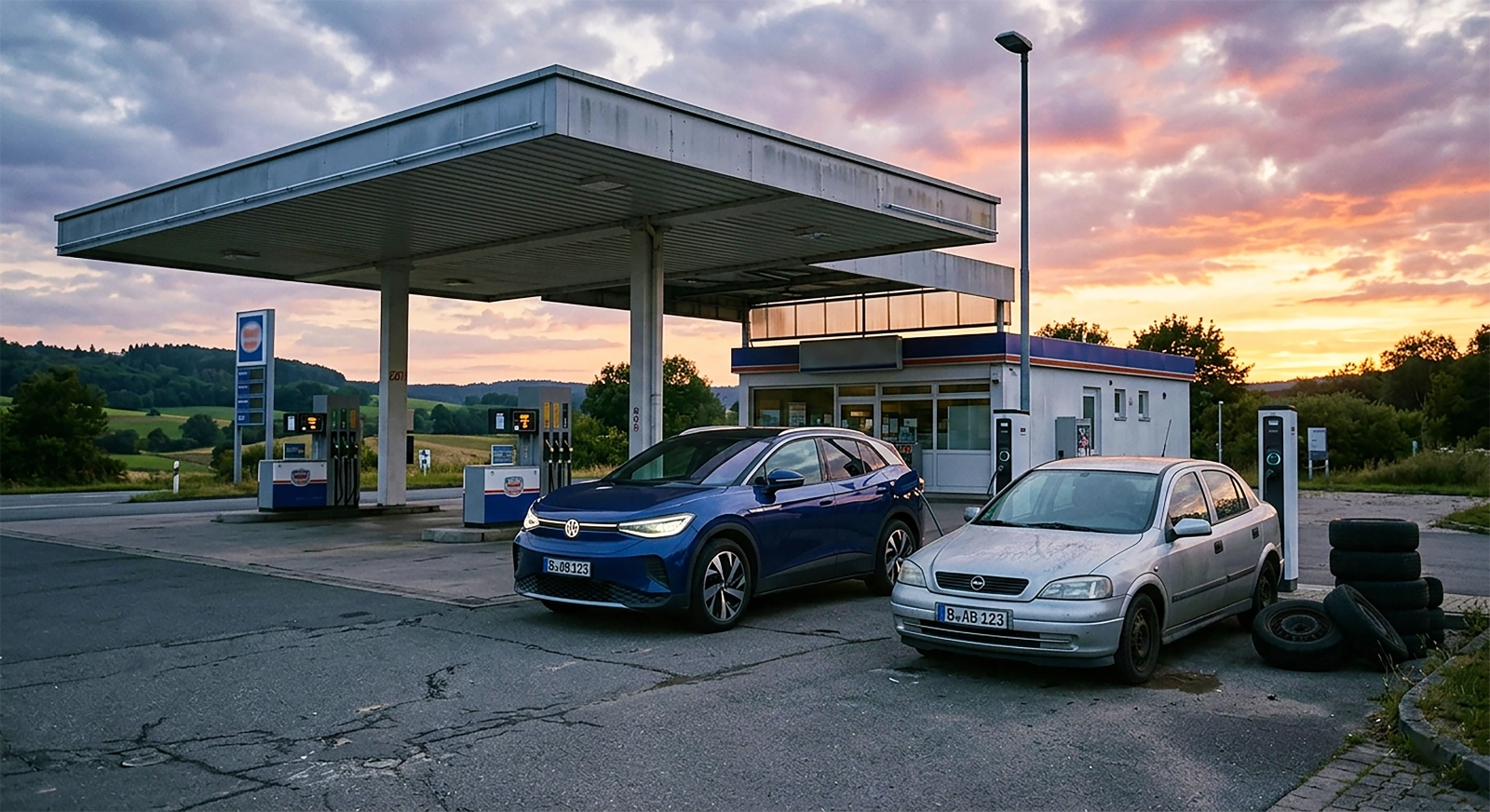
The conflict in Iran is pushing more and more European drivers towards electric cars
The outbreak of conflict in Iran and instability in the Middle East have sent shockwaves through the global energy market, sending fuel prices to record highs across the European continent. In Germany, the price of gasoline and diesel has surpassed the psychological threshold of 2 euros per liter for the first time since 2022, and keeping prices above this level is turning weekly refueling into a real financial effort. The repercussions have not been long in coming: an unprecedented number of drivers are abandoning internal combustion engines in favor of electric vehicles.
Record in the German car market: The Huk-Coburg acceleration effect
According to the latest barometer conducted by HUK-Coburg, one of Germany's largest insurance companies, the second quarter of 2026 saw a historic shift in driver preferences. A record 12% of private individuals who changed their vehicle opted for a 100% electric car. This figure is almost exactly double the adoption rate in January and February (when it stood at 6.3%), before the escalation of the conflict in Iran.
The HUK-Coburg analysis identifies rising fuel prices as the direct triggering factor:
- Massive reorientation: Almost a quarter (24%) of license holders surveyed said they were considering purchasing an electric car for the first time or bringing forward an already planned switch solely due to rising gasoline and diesel prices.
- Impact on high-mileage segments: The shift is particularly visible among long-haul drivers, who drive more than 12,000 kilometers annually. Within this group, the rate of those switching to an electric model reached 14.7%.
- Exploiting the used market: A strong trend has been observed in the used electric car market. In the context of sudden price increases, buyers have turned to used models to avoid the long waiting times specific to new vehicle orders, immediately reducing their travel costs.
The situation in Romania: Growing interest, but a moderate transition from the acquisition threshold
The increase in international oil prices was quickly transmitted to gas stations in Romania, where gasoline and diesel prices followed a similar upward trend. While fossil fuel supply is becoming an increasingly burdensome expense for household budgets, the Romanian market reacts differently to the German one, due to a specific economic and infrastructure context.
- Pragmatic reorientation towards cost per kilometer: The cost difference for driving 100 km between a combustion engine and an electric car (charged at home or at night-time rates) remains considerable. As a result, pump pressure has generated a wave of interest among drivers in large urban areas and companies with commercial or delivery fleets, where high mileage quickly justifies the investment.
- Domestic car market: New electrics vs. hybrid solutions: Although the registrations of 100% electric vehicles (BEV) continue to register growth rates compared to previous years, Romanians are adopting a more cautious behavior. Due to the still high initial purchase price and the changes made to the subsidy programs (Rabla Plus), many local buyers choose hybrid models (HEV/PHEV) or LPG as an intermediate step to reduce consumption.
- Charging infrastructure – moderate factor: Unlike Germany, where coverage with fast charging stations allows for easy transition even without a private garage, in Romania the lack of a dense network in residential areas of blocks of flats tempers the pace of adoption among the general population.
The accelerated increase in fuel prices caused by the geopolitical conflict in Iran demonstrates that the purchasing decision on the automotive market remains closely linked to the daily operating cost. While in Western Europe the psychological and financial effect of fuel over 2 euros/liter is quickly pushing consumers directly towards 100% electric mobility, in Romania the process is translating into a broader search for economic alternatives — from hybridization to small-class urban electric cars.