The Romanian automotive sector under pressure from the European crisis and a decline of almost 8% in the first eight months
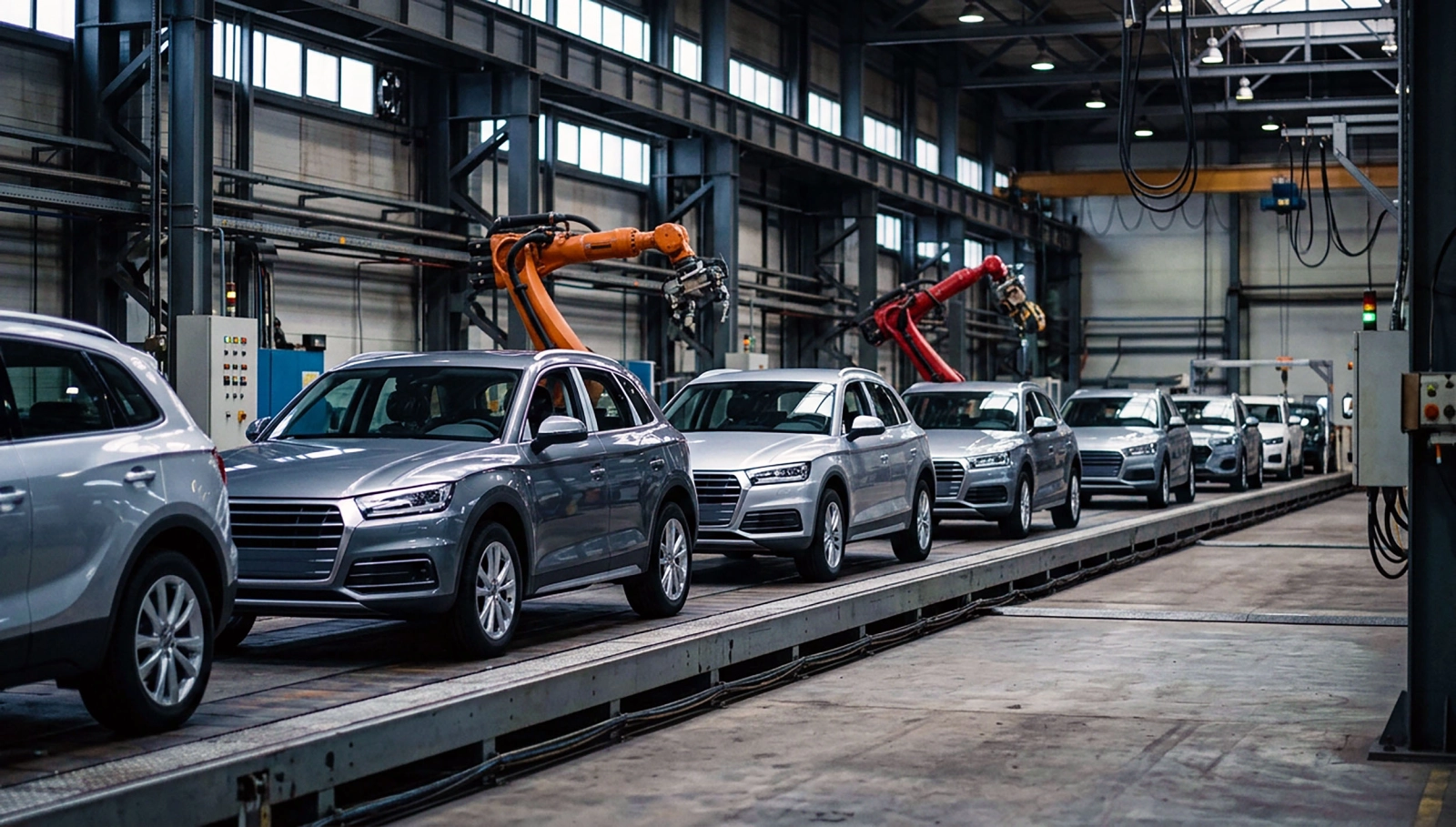
The Romanian automotive industry, one of the fundamental pillars of the national economy, is facing a visible setback in 2026. In the first eight months of the year, total production of passenger cars assembled in Mioveni and Craiova recorded a decrease of 7.8% compared to the same period last year, reflecting the turbulence affecting the entire European automotive market.
The big picture: Brakes on assembly lines
Between January and August, Romanian car factories produced a total of 319,750 cars. While volumes remain significant, the threshold is below the level of 2025, when the production pace was supported by a still firm post-pandemic demand.
The contribution of the two largest builders in the country to this total is divided as follows:
- Dacia (Mioveni): 169,014 units produced.
- Ford Otosan (Craiova): 150,736 units produced.
The direct comparison indicates a compression of production volumes by 7.8%, an alarm signal for the local component supply chain, heavily dependent on orders from the two large plants.
July-August dynamics: Between full pace and technical standstill
The monthly evolution shows a sharp discrepancy between the summer months, explainable by the specifics of industrial activities in the automotive sector.
| Production Indicator | July 2026 | August 2026 |
| Dacia (Mioveni) | 25,869 units | 3,741 units |
| Ford Otosan (Craiova) | 23,302 units | 8,866 units |
| Total National | 49,171 units | 12,607 units |
August saw a low volume of just 12,607 cars, but this figure does not reflect an unexpected collapse in demand, but a scheduled operational pause. Between August 3 and 19, both plants shut down their assembly lines for annual technical overhauls, maintenance checks and equipment reconfiguration.
Unlike August, July demonstrated the maximum production capacity of the two factories, exceeding the threshold of 49,000 units.
Causes of the decline: The perfect storm in the European auto industry
The almost 8% decline recorded in Romania is not an isolated phenomenon, but the direct result of an unfavorable international context. The European automotive industry is going through the most severe restructuring in recent decades, driven by several competing factors:
1. Aggressive brand offensive in China
Chinese manufacturers of electric and hybrid vehicles continue to gain market share in Europe thanks to low production costs, state support and vertical integration of the battery chain. This price pressure is forcing European manufacturers to revise their sales estimates downwards.
2. The Volkswagen Group crisis and the shockwaves in the region
The unprecedented measures taken by German giant Volkswagen — which announced the possible closure of some factories in Germany and massive layoffs — signal a deep structural crisis. The decline in demand at the group level is affecting the entire European ecosystem of subcontractors, many of whom also have production capacities in Romania.
3. Economic pressure and buyer hesitation
Inflation still felt at the household level, high interest rates on car loans and uncertainties related to regulations regarding the transition to electric vehicles have led European customers to postpone the purchase of new cars. Weaker demand in Romania's traditional export markets (France, Germany, Italy) directly translates into reduced orders in Mioveni and Craiova.
Prospects and challenges for Mioveni and Craiova
The Romanian automotive sector is in a moment of strategic reconfiguration:
- Mioveni (Dacia): Relying on successful models such as the Duster and the new Bigster represents an anchor of stability. However, maintaining price competitiveness in relation to new market entrants remains the main challenge.
- Ford Otosan (Craiova): The transition to the production of light commercial vehicles and fully electric versions (Transit Courier, Tourneo Courier, Puma EV) requires a period of volume adjustment until the maximum cadence is reached on the market.
The coming months will be decisive in determining whether the 7.8% decline represents just a temporary adjustment in inventories or the onset of a prolonged period of industrial stagnation.
The cascading impact on the components industry: Restructuring, layoffs and pressure on suppliers
The decrease in production at the Dacia and Ford Otosan plants, combined with the reduction in volumes ordered by the major automotive groups in Europe (especially from Germany and France), has a direct rebound effect on the horizontal automotive components industry in Romania. The parts supplier sector, which employs over 200,000 people nationally, is feeling the full impact of the market contraction.
1. Shockwave on the supply chain
Auto component companies (tier I and II suppliers) operate in a tightly synchronized system with assembly lines. When major manufacturers reduce production rates by as much as 8%, orders for subassemblies—from wiring harnesses, plastics, molded parts, and upholstery to electronic modules—often drop by an even greater percentage. Manufacturers in the industry are forced to quickly adjust their operational capabilities to avoid costly inventory buildup.
2. The wave of collective layoffs and restructuring
The most acute effect of the decrease in orders is the optimization of labor costs. In recent months, production units in various regions of the country have announced measures to reduce the number of employees:
Collective layoffs: Several auto component factories (such as those in Timiș, Arad or Sălaj counties) have resorted to collective layoffs of hundreds of employees or the permanent closure of some production lines.
Adjusting the work schedule: To avoid permanent layoffs, many factories have reduced the number of work shifts or introduced periods of technical unemployment.
3. Cost pressure and capacity relocation
In addition to the decline in demand, Romanian suppliers are facing a double pressure: rising energy, utility and local labor costs, in parallel with severe demands from automakers to reduce parts prices. In this context, some international groups are considering or have already started moving some manual assembly lines (such as wiring harness production) to markets with lower operating costs outside the European Union.
4. Impact on regional economies
Unlike car production, concentrated in Mioveni and Craiova, auto parts factories are distributed throughout the country (with major hubs in Timisoara, Arad, Sibiu, Brasov, Pitesti, Ploiesti or Bistrița). The reduction in activity in this sector directly affects local economies, community budget revenues and related supply chains (logistics, transport, maintenance and industrial service providers).