"Made in Europe" Offensive: BYD Confirms Atto 2 Assembly in Szeged, While Romania Looks on from the Sidelines
The Chinese giant is consolidating its stronghold in Hungary to "dodge" EU taxes and is already hunting for a location for its third European factory. Unfortunately, the investment train seems to have bypassed our stations again.
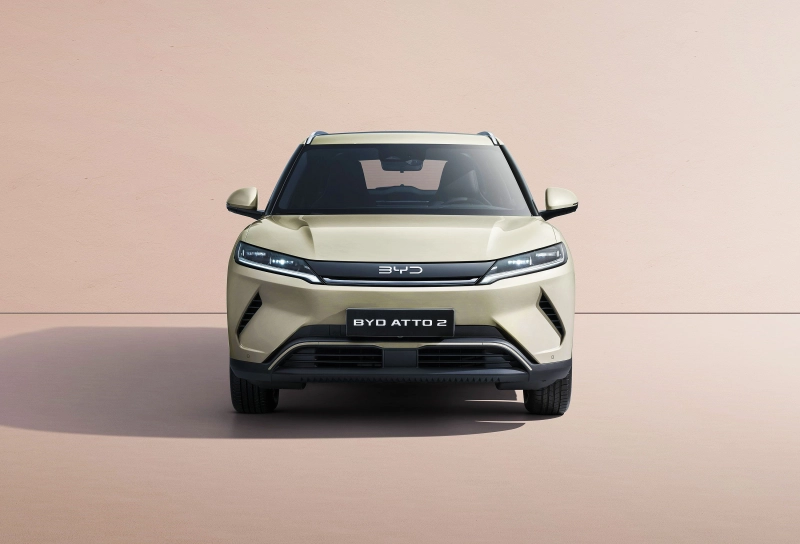
As the European automotive landscape undergoes its biggest transformation in the last century, the center of gravity of production is slowly but surely shifting to the East. But not as far east as we would have liked. Chinese manufacturer BYD has officially confirmed that the new electric version of the Atto 2 model (also known in some markets as the Yuan UP) will roll off the assembly lines of its plant in Szeged, Hungary.
The decision is not just a logistical move, but a checkmate applied to the trade barriers imposed by Brussels.
The "Szeged" Strategy: Four Models and a Wall Against Taxes
The plant in the neighboring country is not just a simple annex, but is quickly becoming BYD's mainstay in Europe. Along with the compact Dolphin Surf (the European version of the Seagull), the electric Atto 2 will benefit from the "Made in the EU" label.
The stakes are huge: avoiding additional customs duties of 27% (which can reach, in certain import scenarios from China, cumulative thresholds of over 45%). Lars Bialkowski, the general manager of BYD's division in Germany, emphasized that the Szeged plant will produce a total of four models, targeting an annual capacity of 300,000 units.
While the pure electric version becomes "European", the Atto 2 Plug-in Hybrid model will continue to be produced in China, remaining subject to current import regulations.
Romania, the great absentee from the "short list"
While Hungary is rubbing its hands and Turkey is already preparing for the second BYD plant in the region, Romania seems to have remained off the radar for the large investment of the third factory. Although we are a growing market for BYD — the brand officially entered our country in May 2025 with models such as the Seal and Sealion 7 — when it comes to production, the Chinese are looking for something else.
Industry rumors point to two main destinations for the third location:
- Spain: Favored due to relatively low production costs and an extremely well-developed green energy network.
- Germany: An "image" option, although high labor and energy costs make this scenario more political than economic.
Why not Romania? Although we have a tradition in the automotive industry through Dacia and Ford, the lack of rapid transport infrastructure (highways that efficiently connect borders) and a still fragile battery supply chain seem to have weighed heavily against us.
What does this mean for the Romanian consumer?
Even if we don't assemble them ourselves, the news that Atto 2 will be produced "over the fence", in Szeged, is good for the Romanian wallet. Local production means:
- More competitive prices: Without import duties, BYD can force prices down, entering direct competition with Stellantis models or the Volkswagen group.
- Short delivery times: The short distance between Szeged and dealers in Romania will considerably shorten the waiting time.
Future Radar: Hungarian pragmatism and Romania's missed opportunity
BYD's success in Szeged is not only a victory for the Hungarian economy, but a wake-up call for the entire region. While our neighbors have managed to turn geographical proximity and tax incentives into a billion-euro technology hub, Romania remains, for the time being, a market and a spectator on the sidelines of the big map of battery and electric vehicle production.
The fact that the electric version of the Atto 2 will bear the “Made in EU” stamp produced just a few kilometers from our border is a benefit for the Romanian consumer, who will have access to cutting-edge technology without the extra customs fees. However, the taste remains bittersweet: Romania’s industrial potential could have accommodated any of these assembly lines. As BYD turns its attention to Spain or Germany for its third plant, it is becoming clear that the battle for investment is no longer fought only in numbers, but in speed of reaction and future-ready infrastructure.