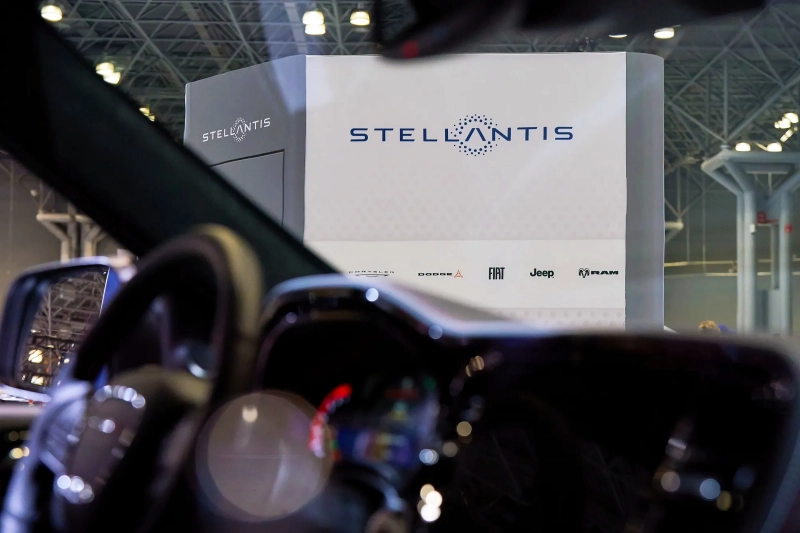
Stellantis ends car production in Poissy after a century of history
In a strategic move that marks the end of an industrial era for the Paris region, the giant Stellantis has officially confirmed that its historic plant in Poissy will cease assembling vehicles in 2028. After almost 90 years of uninterrupted activity, the location that has "seen" brands such as Ford, Simca and Chrysler pass through its doors, is preparing for a radical transformation.
The decision, however, does not represent a definitive closing of the gates, but an ambitious reconversion towards what the industry calls the "circular economy".
From production to recycling: The new "Circular Economy" mission
Stellantis will invest 100 million euros to transform the Poissy site into a European hub of reference for the recycling and reconditioning of automotive components. This move is part of the Sustainera division, a central pillar of the “Dare Forward 2030” strategic plan, through which the group aims to generate revenues of over 2 billion euros from green activities by the end of the decade.
The reasons behind the decision:
- Cost optimization: The production of small cars (B-segment), such as the DS 3 and Opel Mokka, is becoming less and less profitable in factories in Western Europe, where labor and energy costs are high.
- Production overcapacity: Stellantis owns numerous plants in France and Italy, and consolidating production in larger centers (such as Sochaux or Mulhouse) is essential for efficiency.
- EU regulations: Growing pressure for sustainability forces manufacturers to manage the entire life cycle of a vehicle, not just its sale.
- The "GrEEn-campus" concept: Poissy will also become a research and engineering center, bringing together thousands of employees who currently work in dispersed locations.
A history under seven flags
The Poissy plant is a true “living museum” of the French automotive industry. Founded in 1937 by Ford’s French subsidiary, the factory survived the Second World War and passed through many owners, reflecting the constant consolidation of the European automotive sector.
| Period | Owner / Brand | Representative Models |
| 1940 - 1954 | Ford SAF | Ford Vedette |
| 1954 - 1963 | Simca | Simca Aronde, Simca 1000 |
| 1963 - 1978 | Chrysler Europe | Simca 1100, Chrysler 180 |
| 1978 - 1986 | PSA (Talbot) | Talbot Horizon, Solara |
| 1986 - 2021 | PSA (Peugeot/Citroën) | Peugeot 208, Citroën C3 |
| 2021 - 2028 | Stellantis | DS 3, Opel Mokka |
The future of the 1,600 employees
The announcement has predictably raised concerns among unions. While Stellantis promises that the plant’s transformation will ensure job continuity, the nature of the work will fundamentally change. The 1,600 current employees will have to go through massive retraining programs to move from assembling new cars to disassembling, checking and reconditioning used parts.
"It's a bitter victory. The plant is saved, but its identity as a car manufacturer is disappearing," said a local union representative.
While the DS 3 and Opel Mokka models are preparing to find new "homes" in other plants of the group, Poissy is preparing to demonstrate that there is industrial life after the era of internal combustion, transforming itself from a symbol of consumption into one of sustainability.
The transformation will be gradually completed by 2028, when the last new car will leave the production line, bringing an end to a chapter of almost a century of traditional automotive engineering.
Do you think that transforming old factories into recycling centers is the optimal solution to save jobs in the context of the green transition, or is it just a way for large builders to mask the deindustrialization of Western Europe?