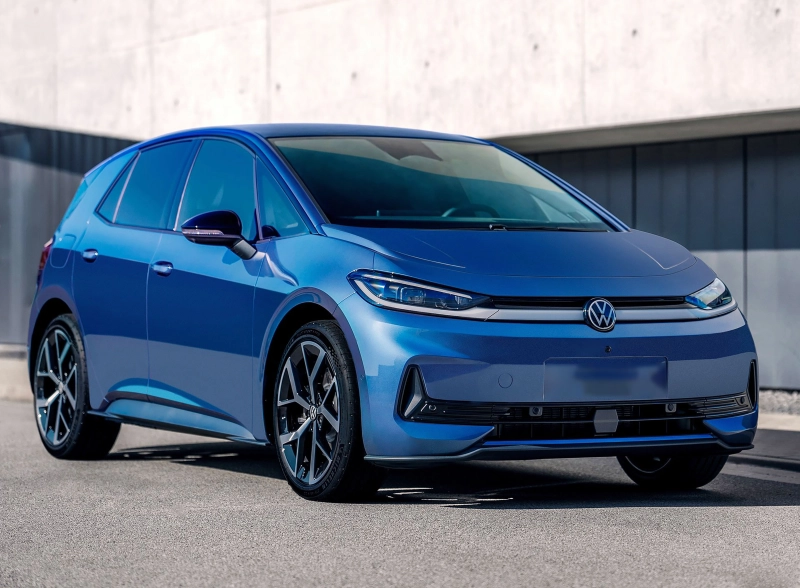
Goodbye, Touch Bar! The new Volkswagen ID.3 Neo 2027 promises to fix everything that went wrong with the first generation
In a move that appears to be a direct response to the chorus of criticism from customers and the automotive press, Volkswagen has officially unveiled the new ID.3 Neo. This major update, considered the second facelift of the compact electric model, is not just a simple aesthetic touch-up, but a reinvention of the way the Germans approach ergonomics and efficiency.
A more mature and completely "painted" design
If the first version of the ID.3 tried to look like a vehicle from a sci-fi future, the new ID.3 Neo adopts a more solid and premium stance. The first visible change is at the front: the headlights are now joined by a thicker LED strip, which culminates in the middle with the famous illuminated Volkswagen logo.
The biggest aesthetic improvement, however, comes in the finishing touches. Volkswagen has decided to ditch the unfinished black plastic elements in favor of a fully painted body. Thus, the bumpers, sills, spoiler, and tailgate are now in the car's color, giving it a much more dynamic and cohesive look, similar to that of a modern Golf.
Inside: The physical button revolution
The biggest win for users is in the cabin. Volkswagen has basically admitted that the “touch future” was a step taken too quickly.
- Physical buttons on the steering wheel: Goodbye, haptic controls that were accidentally activated with every maneuver! The new steering wheel comes with classic, "clicky" and intuitive buttons.
- Climate control: Below the central screen, the unlit touch sliders (the famous problem of the previous model) have been replaced with dedicated physical buttons for adjusting the temperature and essential functions.
- Rear Windows: Finally, the driver once again has four independent window buttons on the door, eliminating the confusion caused by the "Rear" button on the old model.
Technology has not been neglected, however. The new Innovision multimedia system runs on a generous 12.9-inch screen, while the 10.25-inch digital instrument cluster now offers a retro graphics function, inspired by the first generations of Golfs.
Autonomy and Performance: 630 km on a single charge
Under the hood, the ID.3 Neo brings significant improvements in terms of muscle and efficiency. The range is structured around three battery and engine variants, as follows:
| Trim Level | Power (HP) | Battery (Net) | Range (WLTP) |
| Trend | 170 HP | 50 kWh | ~417 km |
| Life | 190 HP | 58 kWh | ~494 km |
| Style | 231 HP | 79 kWh | 630 km |
In addition to the increased range, the ID.3 Neo introduces the V2L (Vehicle-to-Load) function, allowing the car to power external devices (laptops, coffee makers or even other electric vehicles) at a power of up to 3.6 kW. The charging speed has also been optimized, with the top variant (79 kWh) able to draw up to 183 kW from a fast station, which means a 10-80% charge in under 28 minutes.
A long-awaited novelty is the introduction of the One-Pedal Driving system, which allows complete deceleration to a stop just by lifting your foot off the accelerator.
Safety and optional features
The standard assistance package is now richer, including Front Assist, lane assist and automatic braking in corners. For those who want the full experience, the list of options includes:
- Travel Assist with traffic light recognition.
- Head-up display with augmented reality (AR).
- Harman Kardon premium audio system.
- Seats with massage and memory function.
When can we buy it?
Pre-sales for the new Volkswagen ID.3 Neo officially begin in Europe on April 16, 2026. Although exact prices for the Romanian market have not yet been confirmed, estimates suggest a starting price of around 34,000 - 35,000 Euros.
With this profound facelift, Volkswagen seems to have understood that innovation should not come at the expense of ergonomics. The ID.3 Neo is not just “another electric model”, but the brand’s attempt to regain the title of “people’s car” in the era of electrification.
Do you think returning to physical buttons is the right move for Volkswagen, or should they have further refined the touch interface?