Automated car production, how the BMW Group reached one million driverless guided vehicles
The global automotive industry is constantly redefining the boundaries of efficiency and automation, and production plants are becoming true laboratories of the future. The BMW Group has marked a key milestone on its journey towards full digitalization by announcing the achievement of an impressive milestone: one million driverless vehicles directly inside its factories. This achievement underlines the maturity of an innovative technology that is radically transforming logistics and production processes.
A historic milestone reached: One million driverless cars moved into BMW factories
Initially implemented as a pilot project a few years ago, autonomous driving technology inside industrial premises has moved beyond the experimental stage, transforming into a globally scalable standard application.
- Daily performance: Currently, an average of around 3,500 vehicles are guided fully automatically every day within the German concern's plants.
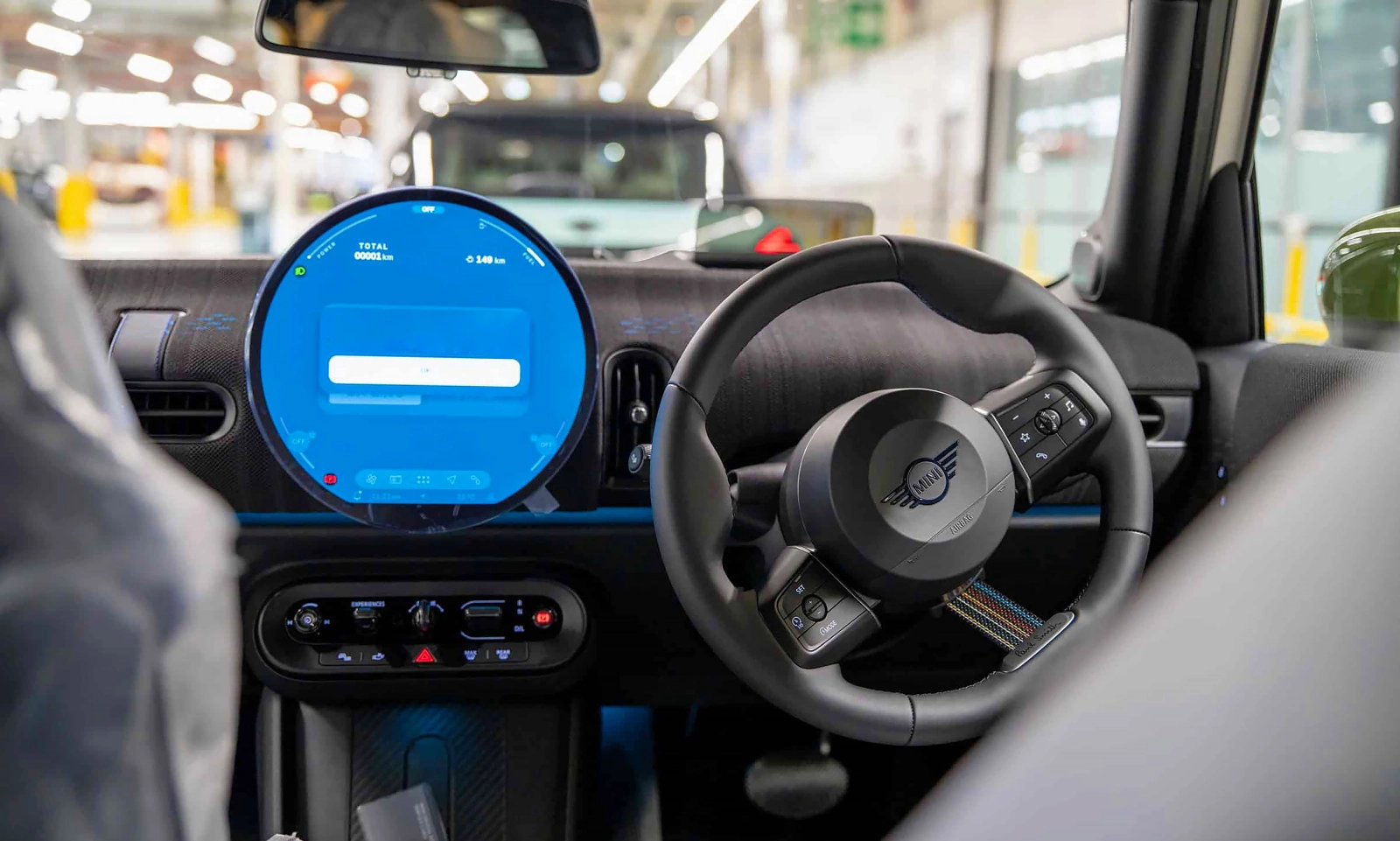
- Contribution of the plants: Since its launch at the Dingolfing plant, the system has been successfully expanded to other reference plants. For example, the Mini plant in Oxford recorded more than 53,000 automated vehicle movements last year, demonstrating the high efficiency of integration into the daily workflow.
- Operational impact: Reaching the threshold of one million vehicles moved without human intervention validates the robustness of the system and its ability to optimize workflows, reducing downtime and logistical risks.
AFW System Technical Architecture: How Machines, LiDAR Sensors, and the Cloud Communicate
The success of this performance is due to the advanced Automated Driving In-Plant (AFW) technology, a complex system that combines the physical infrastructure of the factory with state-of-the-art software.
- External sensors and LiDAR: Unlike systems designed for public roads, a key part of the AFW system’s intelligence is installed in the factory’s surroundings. Extensive networks of LiDAR sensors constantly scan the space, monitoring any changes in real time.
- Dynamic response to obstacles: Vehicles on production lines or in logistics areas can dynamically detect and avoid people, other transport vehicles, or various temporary obstacles along the route.
- Cloud-based interaction: Cloud-based software solutions coordinate the millimeter-scale movement of machines. A concrete example is the extremely precise positioning of a vehicle exactly next to a lifting device (lift) in the factory, where a specific assembly operation takes place, all done through automated commands.
Global network expansion: From European plants to expansion in the United States
The AFW system implementation strategy is part of the company's broad vision of digitalization and intelligent connectivity of the production network.
- Current presence in factories: The technology is already fully operational in four major group plants: Dingolfing, Leipzig, Regensburg and Oxford. Each of these locations adapts the system to the architectural specifics of the models produced and local logistics flows.
- Next steps: The expansion plans don't stop there. The BMW Group announced that the next major milestone will be the implementation of the AFW system at the Spartanburg plant in the United States, marking a further expansion of the technology on the North American continent.
Through these innovations, the German manufacturer continues to set high standards in industrial efficiency, transforming the vision of autonomous mobility into an everyday reality directly on the assembly lines.