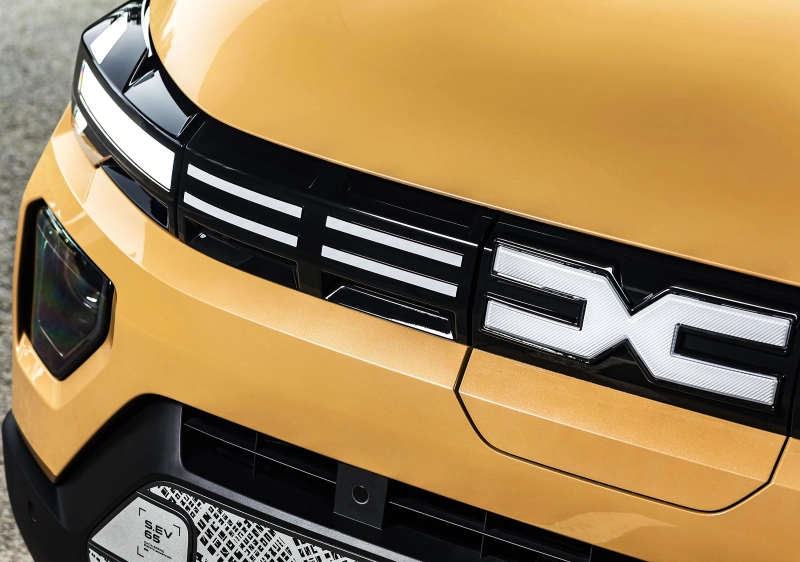
The New Dacia Electric Revolution: Spring's European "sister" comes from Slovenia with an affordable price
Dacia is preparing to hit the European car market again, this time with a model that promises to solve the main criticisms of the little Spring. If the brand's first electric model was often pointed at for its Chinese origins, the future zero-emission vehicle will carry the "Made in Europe" label and will rely on an aggressive pricing strategy: under 18,000 euros.
A French "heart" with Slovenian assembly
The latest confirmations from within the Renault Group indicate that the future electric Dacia will not be just a simple replacement for the Spring, but a completely new model, developed on the technical platform of the future Renault Twingo.
Production will be located at the Novo Mesto plant in Slovenia, a center of excellence for the group's city cars. This strategic move has two major advantages:
- Access to subsidies: Being produced in Europe, the car will be eligible for government bonuses in countries such as France, which have removed models made in China from their aid schemes.
- Simplified logistics: The short distance from major Western markets will cut transportation costs and shorten delivery times.
Robust design and “China Speed” technology
Although it will share the platform with the new Twingo (which relies on a retro-chic look), Dacia will adopt a much more “bulky” and robust design language, inspired by the new Duster and the Bigster concept.
A fascinating detail is the speed with which the project is being developed. Luca de Meo, the former head of Renault, said that this model was designed in a record time of 16 months, even exceeding the work pace of Chinese manufacturers.
Estimated technical specifications (based on the Twingo platform):
| Feature | Estimated Details |
| Battery | Approx. 27-30 kWh (LFP Technology) |
| Range | Approx. 250 - 260 km (WLTP) |
| Motor Power | ~82 hp |
| Length | Approx. 3.8 meters |
Why two electrics in parallel?
Many have wondered if the new model will remove the Spring from the range. The answer from officials is a resolute "No", at least for the first few years. The two models will coexist for strategic reasons:
- Diversity: The Spring will remain the ultra-affordable variant, while the new model produced in Slovenia will offer added refinement and slightly larger dimensions.
- Emissions targets: Dacia desperately needs a large volume of electric cars sold to lower its average CO2 emissions per fleet. The manufacturer did not meet the strict targets imposed by the EU in 2024 and 2025, risking huge fines. Two cheap electric models will help “clean up” the portfolio.
Dacia Spring vs. New Electric (2027): The Duel of Accessibility
Although both models will occupy the mini segment (class A), they are designed for slightly different user profiles. While Spring remains the “pioneer” that democratized access to electric propulsion, the new model from Slovenia promises a higher technological maturity, being built on a much more modern platform.
Here are the main estimated differences:
| Feature | Dacia Spring (Current) | New Dacia Electric (Slovenia) |
| Production Origin | China (Shiyan) | Slovenia (Novo Mesto) |
| Platform | CMF-AEV (derived from Renault Kwid) | AmpR Small (formerly CMF-B EV) |
| Starting Price | ~€18,900 (before subsidies) | Under €18,000 (target price) |
| Battery | 26.8 kWh | ~30 kWh (Cost-effective LFP Technology) |
| Range (WLTP) | 220 - 225 km | ~250 - 260 km |
| Motor Power | 45 hp or 65 hp | ~80 - 82 hp |
| Safety / ADAS | Basic systems (2-star Euro NCAP) | New EU standards (GSR2) mandatory |
| Charging Speed | Max. 30 kW DC (optional) | Improved fast-charging technology |
The main conclusions of the comparison:
- Price: Paradoxically, despite being a newer model and produced in Europe, the new electric car is targeting a starting price of less than 18,000 euros. This is possible thanks to the new platform shared with the Renault Twingo and the use of LFP (Lithium-Iron-Phosphate) batteries, which are more robust and much cheaper to produce.
- Performance and Safety: The model produced in Slovenia will offer a more refined driving experience. The AmpR Small platform is much more rigid and allows the integration of state-of-the-art assistance systems (ADAS), mandatory for European safety standards after 2024.
- Eligibility Bonuses: The great advantage of the Slovenian model will be unrestricted access to the “Rabla Plus” in countries like France, where the Spring lost subsidies due to the high carbon footprint resulting from production and transport in China.
If Spring remains the pragmatic solution for fleets and urban deliveries, the new electric Dacia promises to be a much more "rounded" car, capable of satisfying the needs of a young family for daily trips, without major compromises in safety or comfort.
When will we see it on the streets?
The official presentation is expected for the second quarter of 2026 (according to the latest reports), with the commercial debut to take place in 2027.
With a target price of 18,000 euros (without subsidies), Dacia is once again positioning itself as the clear leader in accessibility, at a time when most European manufacturers are struggling to get below the 25,000 euro threshold.