The Romanian Auto Industry at a Crossroads: Why Did Production Drop in 2025 and What Does the “Chinese Assault” of 2026 Hold?
After two years of effervescence, in which assembly lines in Mioveni and Craiova worked at maximum capacity, setting historical records, the Romanian auto industry slightly stepped on the brake pedal in 2025. According to data provided by the Romanian Automobile Manufacturers Association (ACAROM), national production decreased by 2.6%, reaching a total of 545,510 units.
Although the figure remains solid, the symbolic threshold of 550,000 units has not been reached, signaling a change of pace in a sector that represents the backbone of the Romanian economy.
A look to 2025: Dacia remains the leader, Ford Otosan recovers ground
The decline was felt differently by the two big players:
- Dacia (Mioveni): It produced 297,182 vehicles. Although it remains the "locomotive" of the industry, the plant recorded a contraction amid the recalibration of the range and a more cautious demand in the Western European markets. However, models such as Sandero and Duster continue to dominate the European sales charts.
- Ford Otosan (Craiova): With 248,328 cars rolled off the assembly line, the plant in Oltenia consolidated its position, taking advantage of the success of the Puma model and the new Transit/Tourneo Courier variants, including the electric versions that began to take shape in the production plan.
December 2025 was a particularly cold month for the industry, with a 4.13% drop compared to the previous year, suggesting that high inventories and economic uncertainties of European consumers have begun to affect year-end orders.
Forecasts for 2026: Between resilience and the threat from the East
If 2025 was a year of slight stagnation, 2026 promises to be one of profound transformation. Here are the main factors that will dictate the trend:
1. The offensive of Chinese brands
The year 2026 is marked by the “great landing” of Chinese manufacturers in Central and Eastern Europe. Brands such as BYD, MG, Xiaomi and more recently NIO (which enters the local market with interchangeable battery technology) are no longer just curiosities, but direct competitors for the “value for money” segment in which Dacia excels.
- Impact: Romanian manufacturers are forced to accelerate digitalization and maintain competitive prices in order not to lose market share to Chinese vehicles equipped with premium technologies as standard.
2. Geopolitical and Economic Context
The European economy remains under pressure from inflation and high energy costs. Although Romanians' incomes have increased slightly in nominal terms, real purchasing power is limited by still high interest rates on loans.
- Geopolitics: Trade tensions between the EU and China (customs duties on electric vehicles) could benefit local production in Romania, making cars produced in Mioveni and Craiova more attractive in terms of the final price without additional taxes.
3. The transition to "Green" and the Junk Program
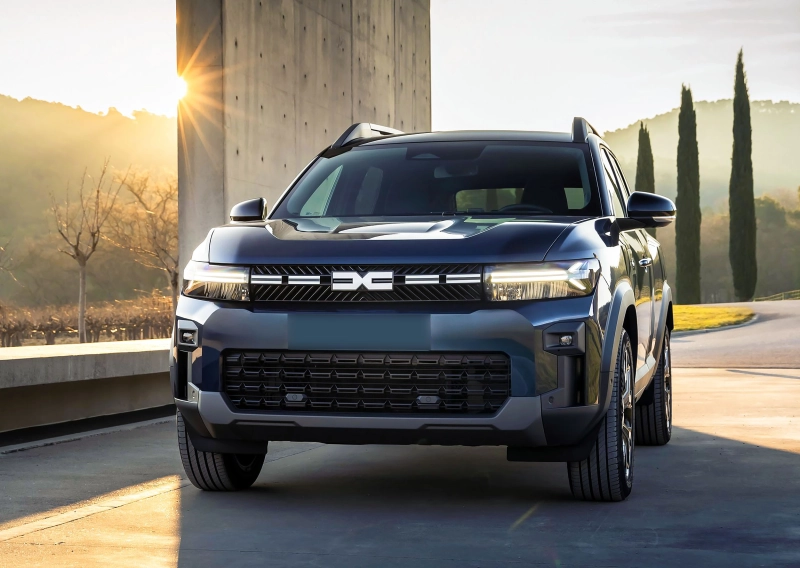
In 2026, the focus shifts massively to hybrid and electric. Dacia is banking on the success of the new Bigster and hybrid versions of the Duster, while Ford Otosan is accelerating its production of electric commercial vehicles. However, the success of domestic sales depends enormously on government subsidies (Rabla Plus), which in 2026 could undergo budget changes.
Trend Estimation: A moderate recovery or a new decline?
We estimate that 2026 will be a year of stabilization with a slight growth potential (1-2%).
- Why growth? The full launch of the Dacia Bigster model will attract a new category of customers (C-SUV segment), and Ford Craiova will reach maturity with the production of the new Transit models.
- Why moderate? Chinese competition will "bite" from exports to Western Europe, and consumers will be more selective, preferring hybrid models to the detriment of purely thermal ones.
Conclusion
The Romanian automotive industry is not in crisis, but in an adaptation phase. Survival and success in 2026 will depend on how quickly our plants integrate new technologies and how the Dacia brand manages to maintain its aura of "smart purchasing" in the face of the Asian technological avalanche.